60 Love Riddles for Kids With Answers
Love is not just about romance. It can mean caring for family, being a loyal friend, helping a classmate, or looking after a pet. A good riddle gives kids a playful way to think about those everyday moments. These puzzles are suitable for home, school, family game nights, Valentine’s Day cards, and kindness activities.
These riddles work best when everyone gets time to guess and nobody feels rushed. Read a clue aloud, pause for ideas, then reveal the answer and talk about why it fits.
- Try 60 varied riddles with answers, difficulty labels, and short explanations.
- Use the questions to start friendly conversations about kindness, trust, respect, and friendship.
- Try the clean jokes and trivia for classroom warm-ups, family time, or Valentine’s Day activities.
- Love can be shown in many ways, and every person’s comfort and boundaries matter.
How to Use These Love Riddles
Let kids guess before showing the answer. Younger children may enjoy the easy clues, while older children can explain their reasoning or write a new clue of their own. In a classroom, split into small teams and award points for thoughtful explanations as well as correct answers. For a quieter activity, put one riddle on a lunchbox note or greeting card each day.
These riddles focus on caring relationships, family, friendship, and everyday kindness. They are not a test of who loves someone most. A healthy relationship includes respect, honesty, and room for each person to say what feels comfortable.
Love Riddles for Kids With Answers
Try to solve each puzzle before opening the answer. The difficulty label is a guide, not a grade; children may find different riddles easy or tricky.
1. I have four letters, begin with L, and can mean caring for family, friends, or someone special. What am I?
Answer: Love
Why it fits: The word love has four letters and can describe many kinds of caring relationships.
2. I have two rounded tops and a point below. You see my shape on Valentine cards. What am I?
Answer: A heart symbol
Why it fits: The familiar heart shape is often used to represent love.
3. I arrive in an envelope, often covered in hearts, and carry kind words inside. What am I?
Answer: A Valentine card
Why it fits: Valentine cards share messages with friends, family, and loved ones.
4. I am red or pink, sweet to eat, and sometimes shaped like a tiny heart. What am I?
Answer: A Valentine candy
Why it fits: Heart-shaped sweets are a popular Valentine treat.
5. I have petals and a stem, and people often give me to show affection. What am I?
Answer: A flower
Why it fits: Flowers are a traditional gift for many special occasions.
6. I have wings in pictures, carry a bow, and am linked with love in Roman stories. Who am I?
Answer: Cupid
Why it fits: Cupid is a figure from Roman mythology often shown on Valentine decorations.
7. I can be tied around a gift, curled with scissors, and untied in a second. What am I?
Answer: A ribbon
Why it fits: Ribbons are often used to decorate gifts.
8. I need no paper or screen, but I can last for hours when two people take turns talking and listening. What am I?
Answer: A good conversation
Why it fits: A good conversation gives both people a chance to share thoughts and listen to each other.
9. I have no voice, but I can say ‘I care about you’ when words feel hard to find. What am I?
Answer: A thoughtful note
Why it fits: A written note can communicate care without a spoken conversation.
10. Two people can build me by listening and keeping promises. I grow stronger with honesty, but one lie can crack me. What am I?
Answer: Trust
Why it fits: Trust develops when people are honest and dependable.
11. I have many pieces and fit together only when each one finds its place. Friends sometimes compare themselves to me. What am I?
Answer: A jigsaw puzzle
Why it fits: Puzzle pieces can be a playful comparison for people with different strengths.
12. I am made of two matching halves, but I am not a heart. You may wear me with a friend. What am I?
Answer: A pair of friendship bracelets
Why it fits: Matching bracelets can be a keepsake shared by friends.
13. I travel across the world in seconds, may arrive with a smiley face, and fit in your pocket. What am I?
Answer: A text message
Why it fits: A text can send a quick greeting or caring message across long distances.
14. I can make a room feel warmer without turning up the heat. People often share me when something is funny. What am I?
Answer: Laughter
Why it fits: Shared laughter can make time together feel cheerful.
15. I am a promise you make with your actions, not just your words. Friends need me to count on each other. What am I?
Answer: Reliability
Why it fits: Being reliable means doing what you said you would do.
16. I am invisible, but a kind word can lift me and an insult can hurt me. What am I?
Answer: Someone’s feelings
Why it fits: Words can affect how another person feels.
17. I am two words that can turn a small favour into a warm moment. The first asks for nothing; the second shows you noticed. What am I?
Answer: Thank you
Why it fits: Saying “thank you” shows that you noticed and appreciate someone’s help.
18. I can fix a mistake only when I come with honesty and changed behaviour. What am I?
Answer: An apology
Why it fits: A sincere apology includes taking responsibility and trying to make things right.
19. I am something you can give a friend who feels sad, even if you cannot solve the problem. What am I?
Answer: A listening ear
Why it fits: Listening can show support without pretending to have every answer.
20. I am a tiny drawing with a smile, a heart, or a wink, sent in a text. What am I?
Answer: An emoji
Why it fits: Emojis can add a friendly tone to digital messages.
21. I am a day in February when people often exchange cards, sweets, and kind messages. What day am I?
Answer: Valentine’s Day
Why it fits: Valentine’s Day is commonly celebrated on February 14.
22. I am a box with a lid, sometimes tied with a bow, and I may hide a surprise. What am I?
Answer: A gift box
Why it fits: A gift box holds a present, though the thought behind it matters most.
23. I am sweet, can be wrapped in foil, and sometimes arrive in a heart-shaped box. What am I?
Answer: Chocolate
Why it fits: Chocolate is a common Valentine’s Day treat.
24. I have turns, rules, and sometimes a little friendly competition. Put me on a table and I can bring a family together. What am I?
Answer: A board game
Why it fits: Board games give people a shared activity and a reason to spend time together.
25. I can take you to a dragon’s cave or the moon without leaving the sofa. What am I?
Answer: A story
Why it fits: Stories let readers imagine places and adventures together.
26. I am not a present you can wrap, but I can be more valuable than a toy. What am I?
Answer: Time
Why it fits: Giving someone your attention and time can show care.
27. Two friends make a pattern with their hands, and only they know the next move. What are they doing?
Answer: A secret handshake
Why it fits: Friends sometimes create their own handshake as a playful shared tradition.
28. I have a scent, a colour, and sometimes thorns. A red one is often linked with romance. What am I?
Answer: A rose
Why it fits: Roses are commonly associated with love and affection.
29. I can be whispered, written, or shown through actions, but I mean more when I am sincere. What am I?
Answer: A message of love
Why it fits: Words and actions can both express love when they are genuine.
30. I am a feeling that helps you imagine how another person might feel in your place. What am I?
Answer: Empathy
Why it fits: Empathy means trying to understand another person’s feelings.
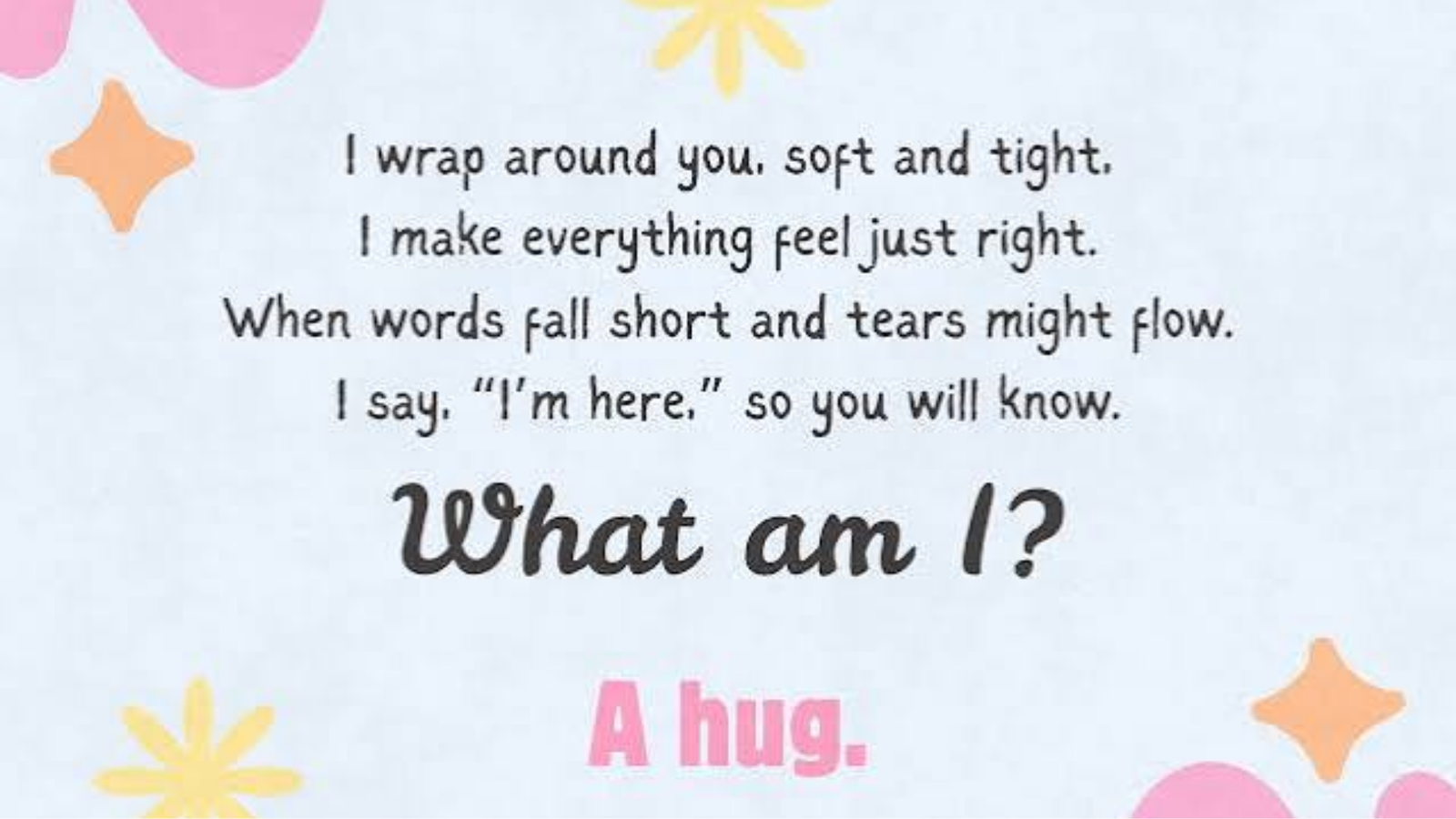
31. I am a question you ask before a hug, and I help make sure the hug is welcome. What am I?
Answer: ‘Would you like a hug?’
Why it fits: Asking first respects another person’s comfort and choice.
32. I am a special bond that can form between people who share jokes, secrets, and adventures. What am I?
Answer: Friendship
Why it fits: Friendship grows through trust, care, and shared experiences.
33. I am a place in a game where you make room for one more player. What am I showing?
Answer: Inclusion
Why it fits: Inviting others to join helps them feel welcome.
34. I can be long-distance but still arrive through a call, message, or letter. What am I?
Answer: A connection
Why it fits: People can stay connected even when they live far apart.
35. I help a disagreement end without anyone needing to win. What am I?
Answer: A compromise
Why it fits: A compromise is an agreement where people find a solution together.
36. I am the opposite of keeping score about who gave more. I help people give freely and fairly. What am I?
Answer: Generosity
Why it fits: Generosity means being willing to give or help.
37. I am a tiny bridge between two people: one offers help, and the other feels less alone. What am I?
Answer: An act of kindness
Why it fits: A thoughtful action can help someone feel supported and included.
38. I am what you show when you accept that a friend can like a different song or game. What am I?
Answer: Respect
Why it fits: Respect allows people to have different preferences and opinions.
39. I may make no sense to anyone else, but one word can make two friends burst out laughing. What am I?
Answer: An inside joke
Why it fits: Inside jokes are funny because friends share the story behind them.
40. I freeze one moment without stopping time. You might find me in a frame, a phone, or an old album. What am I?
Answer: A photograph
Why it fits: A photograph preserves a moment people may enjoy remembering together.
41. I am not a place or a thing, but years later a smell, song, or photo can bring me back. What am I?
Answer: A memory
Why it fits: Memories can return when something reminds us of a shared experience.
42. I am a kind word for something a person did well, not just how they look. What am I?
Answer: A compliment
Why it fits: A thoughtful compliment can recognize effort, skill, or kindness.
43. I help friends feel safe telling the truth because I grow when people keep their word. What am I?
Answer: Trust
Why it fits: Trust builds through honest and dependable actions.
44. I am a fresh start after a disagreement, often beginning with listening and saying sorry. What am I?
Answer: Making peace
Why it fits: People can repair a disagreement by listening and taking responsibility.
45. I can be a favourite song sung together, even when neither person knows all the words. What am I?
Answer: A shared moment
Why it fits: Doing something together can become a happy memory.
46. I am not a competition, but I make room for another person’s success without feeling smaller. What am I?
Answer: Being happy for someone
Why it fits: Celebrating another person’s success is a way to show support.
47. I am a gentle way to show affection to a pet: food, fresh water, and safe care. What am I?
Answer: Looking after a pet
Why it fits: Pets depend on people for daily care and safety.
48. I am something you can give yourself by resting, asking for help, and speaking kindly to yourself. What am I?
Answer: Self-care
Why it fits: Self-care includes meeting your needs and treating yourself with kindness.
49. I am a boundary that tells others what feels okay to you. What should they do with me?
Answer: Respect it
Why it fits: Everyone can express limits, and others should respect them.
50. A class makes me from paper links, and each link names one good thing about someone. What am I?
Answer: A kindness chain
Why it fits: A kindness chain records positive actions or things people appreciate.
51. I am the colour of many Valentine decorations and flamingos, but I am not a flower. What colour am I?
Answer: Pink
Why it fits: Pink is a common colour in Valentine decorations.
52. I am a red bird often used as a symbol of love, and I can also mean a sweetheart in a song. What am I?
Answer: A lovebird
Why it fits: Lovebirds are small parrots; the word is also used for affectionate couples.
53. I have a bow but cannot shoot, and I appear on gifts to make them look special. What am I?
Answer: A gift bow
Why it fits: A decorative bow is often tied onto a present.
54. I happen in many classrooms in February: names are written, small cards are swapped, and everyone can join in. What am I?
Answer: A classroom Valentine exchange
Why it fits: Some classes celebrate by exchanging friendly cards with classmates.
55. I am a way to show you care when a friend makes a mistake: help them try again instead of laughing. What am I?
Answer: Encouragement
Why it fits: Encouragement helps someone keep trying without shame.
56. I am a word that means noticing what someone has done and valuing it. What am I?
Answer: Appreciation
Why it fits: Appreciation can be expressed with specific thanks.
57. I help a friendship survive a change of plans because I let people adjust without getting cross. What am I?
Answer: Flexibility
Why it fits: Flexibility helps people adapt when things do not go as expected.
58. I have nine letters, begin with F, and describe people who laugh together, help each other, and share secrets. What am I?
Answer: Friendship
Why it fits: Friendship is a caring bond that can grow through trust and shared experiences.
59. I can be told in a minute, cost nothing, and make a friend laugh long after the words are over. What am I?
Answer: A joke
Why it fits: A funny story or joke can become a happy moment friends remember.
60. I am a promise to tell the truth, even when it would be easier to hide a mistake. What am I?
Answer: Honesty
Why it fits: Honesty helps people understand what happened and rebuild trust.
Funny Love and Friendship Jokes for Kids
These clean jokes use simple puns, playful comparisons, and talking objects. Read the setup first, pause for guesses, then share the punchline.
1. Why did the Valentine card go to art class?
Punchline: It wanted to learn how to draw someone’s heart.
2. What did the envelope say to the love letter?
Punchline: You can always count on me to keep things sealed.
3. Why did the chocolate bar bring a ladder to the Valentine party?
Punchline: It wanted to reach the sweet spot.
4. What did the heart say after finishing a marathon?
Punchline: I’m all pumped up!
5. Why did the flower get picked for the school team?
Punchline: It was great at rooting for everyone.
6. What did one friendship bracelet say to the other?
Punchline: We make a great link.
7. Why did the pencil give its friend a card?
Punchline: It wanted to make a good point.
8. What did the stamp say to the Valentine?
Punchline: I’ll stick with you until you get there.
9. Why did the two cookies share their lunch?
Punchline: They knew friendship is better when you chip in.
10. What did the shy heart write on its card?
Punchline: You make me skip a beat.
11. Why did the calendar get a Valentine?
Punchline: Because someone wanted to make its day.
12. What did the flower say when its friend needed cheering up?
Punchline: I’m rooting for you!
13. Why did the music notes become best friends?
Punchline: They were always in tune with each other.
14. What did the puzzle piece say to its friend?
Punchline: You fit right into my picture.
15. Why did the teddy bear take a card to school?
Punchline: It wanted to give its classmate a bear-y nice surprise.
16. What did the candy heart say after telling a joke?
Punchline: I hope that was sweet enough.
17. Why did the two magnets become friends?
Punchline: They were drawn to each other.
18. What did the rose say to the bee?
Punchline: Thanks for pollen my day brighter.
19. Why did the friendship group bring a map?
Punchline: They wanted everyone to find their way in.
20. What did one star say to its best friend?
Punchline: You make my whole night brighter—and I don’t even have to be the sun.
Love, Kindness, and Friendship Trivia
Use these quick questions as a classroom quiz or conversation starter. Answers include a short context note to help children understand the idea.
1. Which shape is commonly used to represent love?
Answer: A heart
Learn more: It is a familiar symbol on cards, drawings, and decorations.
2. Which date is Valentine’s Day celebrated in many countries?
Answer: February 14
Learn more: Traditions and ways of celebrating vary around the world.
3. What is the name of the Roman figure often shown with a bow and arrows on Valentine’s cards?
Answer: Cupid
Learn more: Cupid is associated with love in Roman mythology.
4. Which flower is often linked with love and affection?
Answer: The rose
Learn more: Different rose colours can carry different meanings in popular traditions.
5. What do we call a message written to show someone we care?
Answer: A love note or kind note
Learn more: It can be romantic, friendly, or for a family member.
6. What is empathy?
Answer: Trying to understand how another person feels
Learn more: Empathy can help people respond with care.
7. What does it mean to respect a boundary?
Answer: To honour someone’s stated limits and choices
Learn more: Respecting boundaries helps people feel safe.
8. Name one way to show a friend you are listening.
Answer: Make eye contact if comfortable, avoid interrupting, or ask a follow-up question
Learn more: Good listening can look different for different people.
9. What is one thing a sincere apology should include?
Answer: Taking responsibility for what happened
Learn more: A useful apology also considers how to make things right.
10. Can love be shown through actions as well as words?
Answer: Yes
Learn more: Helping, listening, and keeping promises are examples.
11. What is a healthy way to respond if someone says they do not want a hug?
Answer: Respect their answer
Learn more: Affection should be welcome to everyone involved.
12. What can help a friendship grow stronger over time?
Answer: Trust, kindness, honest communication, and shared experiences
Learn more: Strong friendships need care from both people.
13. What is gratitude?
Answer: Noticing and appreciating something someone has done
Learn more: Saying thank you is one way to express it.
14. What does inclusion mean?
Answer: Making sure people have a chance to take part and feel welcome
Learn more: Small invitations can help people feel part of a group.
15. Name one way to show care for a pet.
Answer: Provide food, fresh water, safe shelter, and gentle attention
Learn more: Responsible pet care is a daily commitment.
Simple Ways to Share Kindness
- Write a kind note for a family member or friend.
- Invite someone to join a game instead of leaving them out.
- Listen without interrupting when someone wants to talk.
- Thank a person for something specific they did.
- Ask before hugging or borrowing someone’s things, and respect the answer.
Small actions count. You do not need to buy a gift or make a big speech to show someone they matter.
Frequently Asked Questions
What are good love riddles for kids?
Good choices are short, clear clues about kindness, friendship, family, hearts, cards, and caring actions. The answer should make sense once the clue is explained.
Can teachers use these riddles in class?
Yes. Teachers can use them as warm-ups, partner activities, writing prompts, or a kindness-week game. Invite students to explain their thinking rather than focusing only on speed.
Are these riddles only for Valentine’s Day?
No. They can be used throughout the year to talk about friendship, family, empathy, and respectful behaviour.
How can I make a riddle activity fair for younger children?
Read each clue aloud, allow extra thinking time, and offer a hint if needed. Let children work together and accept a sensible answer when they can explain their reasoning.
What should kids remember about showing affection?
Care should be kind and respectful. Ask before physical affection, listen when someone says no, and remember that people show and receive care in different ways.
Conclusion
Riddles can turn a few spare minutes into a chance to laugh, think, and talk about what makes people feel cared for. Choose a few favourites for a family night, classroom activity, or handmade card, and let everyone take a turn creating their own. For more brain-teasing fun, explore the other kid-friendly collections on Riddlebase.